Two for Mirth

A pair of crows are arguing on the fence
across the street from my office window.
It’s not a big argument, full of caws
and flashing beaks. No, it’s a comfortable
quarrel of picking feathers and well-reasoned
fluffing feathers and hopping away a few inches.

One has flown and I am sad for the remaining,
sure that sorrow has come to stay.
She flutters away for a moment or two,
but she always comes back to the same perch.
Her eyes search the sky and I know if I look later,
evidence of her nervous talons will be seen on the wood.

I’ve finished my breakfast and I’m starting the second
cup of tea, consumed with numbers and calculations.
Human issues of taxes and income and lost revenues
take up the majority of my mind, but occasionally my eyes
flit to the waiting crow. She’s still there on her fence rail.
I assume she’s anxious for his return, but maybe she knows

right around 10 o’clock a sweeping black will cross my sight.
I watch him settle beside her, a peanut in his beak
and a shiny ribbon tangled about his foot.
The peanut is passed between them, the ribbon swaying pretty.
A comfortable quarrel continues, but the hopping away is traded
for gentle nudges, head touches, while spring laughs around them.

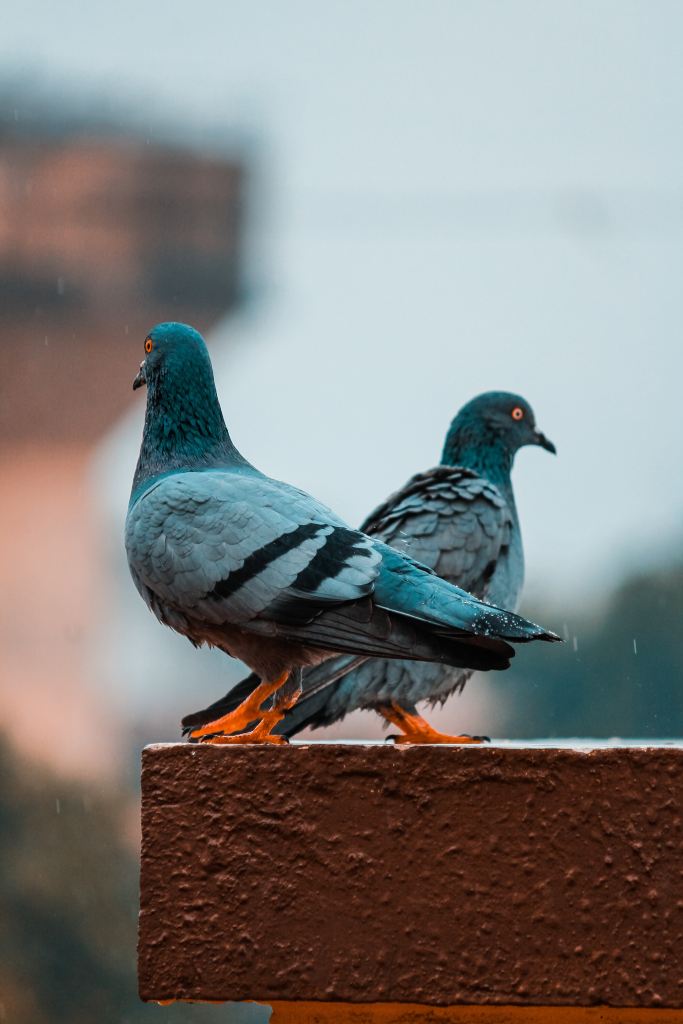
Photo by Tushar Gidwani on Unsplash

Half a Yellow Lemon and a Ginger Cup of Tea

I shouldn’t be at work today.
There are germs orbiting my aura
and I’m currently carrying an entire pharmacy in my handbag.

I have two diagnoses and my doctor asked
if I needed a work excuse.

I told her Tax Day is Monday
and that I don’t have time for strep or a sinus infection,
let alone this headache and achy muscles.

I left with a warning to wear a mask
and to stay away from people.

I’ve shut myself in my office,
closed the door and put a note on the window:
I’m infected. Stay away.

Which is why I was surprised by a quiet knock
about the time I would usually make a cup of tea.

The angel of a receptionist opened the door,
wearing her own  mask, and held a pretty plate with
half a yellow lemon, a slice of buttered toast, and my ginger tea.

“I know you didn’t eat breakfast this morning,
and I figured the tea and lemon might help your throat.”

I raised my weary head as she placed it
on the edge of my desk and backed out,
leaving me to wonder what I ever did to deserve such kindness.

Wishes

When it comes right down to it,
I wish I was a bird.

I want to fly, wind in my face to the next
food source. I want to find shiny trinkets
for my nest, or colored string or someone’s
long blonde hair that a strong April breeze
pulled free from a ponytail.

I want to perch on a telephone wire,
cocking my head to and fro,
watching the humans blunder about
and arguing over what to have for supper.

I want a bird bath in a pretty garden
and some old lady that will faithfully
keep the squirrels from getting to the seed
she had her son pick up from Walmart.

I want to fly south for the winter
with all my kin and not question
if there is enough money in the bank
and enough vacation time for such a long trip.

My therapist once told me that wanting to run away
is a polite way of saying you wanted
to commit suicide. That by saying I wanted to run away,
I had made up my mind that everyone around me
was better off without me.

I believed her for a time,
but now I don’t think she was right.
I think wanting to run away is a sign you need
to take time for yourself, recalibrate your space
and mind so that you can breathe.

I wonder what she would say about wishing
to be a bird.

Easter

It would surprise me if the rapture
happened at sunrise on Resurrection Sunday.
Jesus, with all his miracles has already
done the sunrise coming back thing.
He’ll choose some other time.

At least that’s what I think.

But still, we gathered at sunrise
in our pastel, Easter glory
waiting for him to return.
The adults with dry, heavy eyes
and the little boys with chocolates hidden
in their suit pockets and the little girls carrying
their special patent leather handbags
filled with brightly colored treats and lip gloss.
The crinkle of colored foil,
slowly being unwrapped as they tried,
and failed, to be quiet while they
sat in the pews sneaking a snack.

He didn’t come back this year at sunrise
and I wasn’t surprised.
The lure of the county’s finest cooks
bringing their best breakfast dishes
didn’t attract him the last thirty years.
Why would it work this year?

Maybe we should try something else
to hasten his return.

I don’t know what would work,
but loving your neighbor and carrying on his
work of taking care of the people on the fringe
sounds like a good place to start.

Sweeping Superstitions

Don’t let nobody sweep under your feet, she said
as I pulled my feet up onto the couch,
placing my little girl chin on my knees.
“Why can’t you sweep under my feet?” I asked.
I want to see you married someday, my girl.

From her brown corduroy couch, I watched
as she swept her floors, a wooden handled
straw broom for the kitchen and dining room,
and a rainbow vacuum for the carpets.
She sang and swept. Swept and sang.

I was there the day the salesman sold
her the promise of clean carpets
and an easier time keeping her house in order.
It seemed to me she worked just as hard
with the rainbow as she had before.

The day I was moving out of my university dorm
and into my first apartment, she visited me.
She held out a brand-new broom and dustpan.
Don’t take your old broom into your new house, she said.
Let the old dirt stay where it is.

When everyone had cleared out of my new place,
I swept and sang. Sang and swept.
I surveyed my kitchen floors just like she had
and decided it was probably for the best
that I’d left the old dirt in my old life.

Summer Jewels

She could often be found
admiring the fruits of her labor
in her fully stocked pantry –
mason jars of green beans, corn,
tomato juice, tomato sauce, various soups.
She adjusted their stacked-up lines,
shining jewels in summer colors
waiting to be enjoyed once the cold came in.

Six months after my granny died,
I watched my mother from her kitchen table,
She held the last of the green beans,
having rationed the last ten jars,
knowing that when they were gone
there would be no replacement beans
coming this summer.

Opening the jar, she let tears fall.
Silvery jewels of grief slipping silently
down her cheeks and onto her apron.
She held them up to her nose,
and then quickly dumped them
into the pot on the stove.

The last of the summer jewels
graced our Sunday lunch plates
for a final time.

The Squeeze

We gathered around the worn table,
buttering fresh bread and passing
bowls of buttered peas and mashed potatoes.

I had a horrible dream last night, he said.
I looked up from my peas and watched
him hold back tears, heard his voice
hitch up the octave, and caught a glimpse
of shaking hands before he slipped
them into his lap.

The stoic man of my childhood
has disappeared in the last twelve years,
grandkids change a man apparently.

He was lost, and I couldn’t find him, he said.
He told us how he searched everywhere –
quiet corners, shady stands of trees, the creek.
I yelled for him until my throat was raw.

I looked back at my peas and heard him finally lose
what modicum of control he had left.
But he finally came running down the hill
and threw himself into my arms.

He looked towards the living room,
seeing through the walls,
to where my youngest was silently reading
in a quiet corner with a blanket over his head.

“It was just a dream, Steve,” she said
and reached over to squeeze his hand.

Rain Birds

It was only the occasional flutter
of wings and the soft cooing
that gave them away.

They crowned the clocktower,
looking every bit a part of the architecture,
and I wished I had their job:

fly and coo, find food and flutter in the rain,
exist because they are
with no questions asked.

Surely, if I climbed up to them
they would take flight,
not knowing my intention

is just to sit and rest,
rest in the knowledge that I am
and that fluttering in the rain washes everything clean.

Changing

She weeps
and listens close.
The doctor whispers words
she cannot hear, but understands.
She breathes.

At home,
the trailing vines
do more than hide
her childless, shame-filled arms.
They give

desire
to see things grow.
She digs and sings her joy,
and patiently she waits for rain
to change

the shame
and bitter tears
to cheer and sprouting seeds.
Among the blooming, twilit night
she sits

beside
her grief and pain.
She smiles, her gardeners’ thumb
on full display among the blooms.
She kneels

beside
the trailing vines
she digs, she sings her joy
into the blooming, twilit night.
She weeps.

*This poem is a garland cinquain for those that are interested in that kind of thing.

Trash Birds

Don’t call them trash birds,
Granny always said while she walked
towards Walmart and watched the flock
circle and swoop from the neon sign
to the parked cars to the discarded
French fries and spilled milk shakes.
We don’t mock one of God’s creatures
for doing what they were designed to do.

I can’t count the names thrown my way,
can’t count the ways they have all crumpled
and collected against my ribs
and throat like pieces of garbage
flung from a speeding car on I-64:
too much, not enough, slut, crazy, needy,
attention-seeking, a waste of time, bitch,
not good enough, unfit
to name a few.

So, I never call them trash birds.
I call them by their proper name
and watch with delight when they take flight
as one dancing phantom,
dark against the fiery October sky.

In my dreams, each grackle in the plague
settles on my shoulders and picks up a name,
swallows it down, unhurt and nourished –
doing what they were designed to do.