Running Late and an Existential Crisis

A local man smoking a cigarette
and hocking phlegm onto the pavement,
a large pickup with a horse trailer
taking up a chunk of the parking lot,
an SUV with kayaks on the top
and bicycles on the back,
three teenage boys with pimply faces
clutching cold Ale-8-One bottles,
a red sports car with dark windows,
a mother and a crying child,
a carload of twenty-something girls
laughing and playing music I don’t recognize,

and me on my way to a poetry reading.

I pull my credit card out of the card reader
and begin pumping gas.
I don’t recognize a single person at this gas station
even though I’m smack dab in the middle of my hometown.

Here we all are, gathered for different reasons,
all with the same need,
and I wonder if this group of people
will ever be gathered in the same place again;

if we will ever know each other, if anyone
will remember my face.

Will I remember their faces?

Sweeping Superstitions

Don’t let nobody sweep under your feet, she said
as I pulled my feet up onto the couch,
placing my little girl chin on my knees.
“Why can’t you sweep under my feet?” I asked.
I want to see you married someday, my girl.

From her brown corduroy couch, I watched
as she swept her floors, a wooden handled
straw broom for the kitchen and dining room,
and a rainbow vacuum for the carpets.
She sang and swept. Swept and sang.

I was there the day the salesman sold
her the promise of clean carpets
and an easier time keeping her house in order.
It seemed to me she worked just as hard
with the rainbow as she had before.

The day I was moving out of my university dorm
and into my first apartment, she visited me.
She held out a brand-new broom and dustpan.
Don’t take your old broom into your new house, she said.
Let the old dirt stay where it is.

When everyone had cleared out of my new place,
I swept and sang. Sang and swept.
I surveyed my kitchen floors just like she had
and decided it was probably for the best
that I’d left the old dirt in my old life.

Math and Science

Love is geometry.
Or maybe it is all biology
and electric pulses in our brains.
Possibly algebra where love equals
(a+b2)/2
or something like that some other
poet has calculated to the enth degree.

Whatever it is, I find myself swirling
and so thoroughly steeped
in the euphoria, that I have no need
of oxygen or breathing or anything whatsoever
if it is not him and his overwhelming goodness.

Jim

What you do to pay the bills is not who you are, he said,
tipping his beer towards me and then taking
a long swig while I watched his eyes sparkle.

We ate our cake, chatting about the newly married
couple making spirals around the room, stopping
for a kiss whenever anyone clinked their glass.

Who you are is what you do in your spare time.
He scraped the icing from his plate, smiled
at his wife, and then leaned back in his chair.

So, my dear, who are you?

I didn’t know Jim well. He was the husband of one of my very good friends, Sarah Ryder. He recently passed, and I thought it fitting to share with the world the spectacular advice that he gave to me many years ago at a wedding reception. “What you do to pay the bills is not who you are. Who you are is what you do in your spare time.” Those simple sentences have stuck with me ever since. I repeat them to myself over and over on a regular basis. Jim was an absolute light and he will be missed.

Coffee Creamer

I wasn’t looking, and she added too much creamer.
I drank the coffee anyway,
the sweet liquid coating

my teeth and tongue with a layer
of slick sugar I wouldn’t be able to rid
myself of without a thorough brushing.

Her forearms tensed and flexed
as she balled her nightgown in her fists
and in her lap trying to hide the anxiety,

and I wondered how we had come to this place:
the serving coffee and being anxious
and not meeting each other’s gaze.

We need to talk, she said,
just as I was standing to leave.

I sat back down and waited.

Summer Jewels

She could often be found
admiring the fruits of her labor
in her fully stocked pantry –
mason jars of green beans, corn,
tomato juice, tomato sauce, various soups.
She adjusted their stacked-up lines,
shining jewels in summer colors
waiting to be enjoyed once the cold came in.

Six months after my granny died,
I watched my mother from her kitchen table,
She held the last of the green beans,
having rationed the last ten jars,
knowing that when they were gone
there would be no replacement beans
coming this summer.

Opening the jar, she let tears fall.
Silvery jewels of grief slipping silently
down her cheeks and onto her apron.
She held them up to her nose,
and then quickly dumped them
into the pot on the stove.

The last of the summer jewels
graced our Sunday lunch plates
for a final time.

The Squeeze

We gathered around the worn table,
buttering fresh bread and passing
bowls of buttered peas and mashed potatoes.

I had a horrible dream last night, he said.
I looked up from my peas and watched
him hold back tears, heard his voice
hitch up the octave, and caught a glimpse
of shaking hands before he slipped
them into his lap.

The stoic man of my childhood
has disappeared in the last twelve years,
grandkids change a man apparently.

He was lost, and I couldn’t find him, he said.
He told us how he searched everywhere –
quiet corners, shady stands of trees, the creek.
I yelled for him until my throat was raw.

I looked back at my peas and heard him finally lose
what modicum of control he had left.
But he finally came running down the hill
and threw himself into my arms.

He looked towards the living room,
seeing through the walls,
to where my youngest was silently reading
in a quiet corner with a blanket over his head.

“It was just a dream, Steve,” she said
and reached over to squeeze his hand.

While Weathering a Windstorm

The bradford pears and the redbuds
bloomed early this year.
I don’t know if there is any significance
to this phenomenon,
but it has left me feeling off kilter.

In springs past, when I finally spot
the redbuds blooming on their black branches,
it meant the long dark of winter had passed;
that I could breathe deep the sun
that floods my cells with vitamin d.

But now, with early blooms being ripped
from bending, swaying branches, I feel gutted –
not knowing if it is time to breathe
or if I still need to hide in layers of
wool and thick cotton.

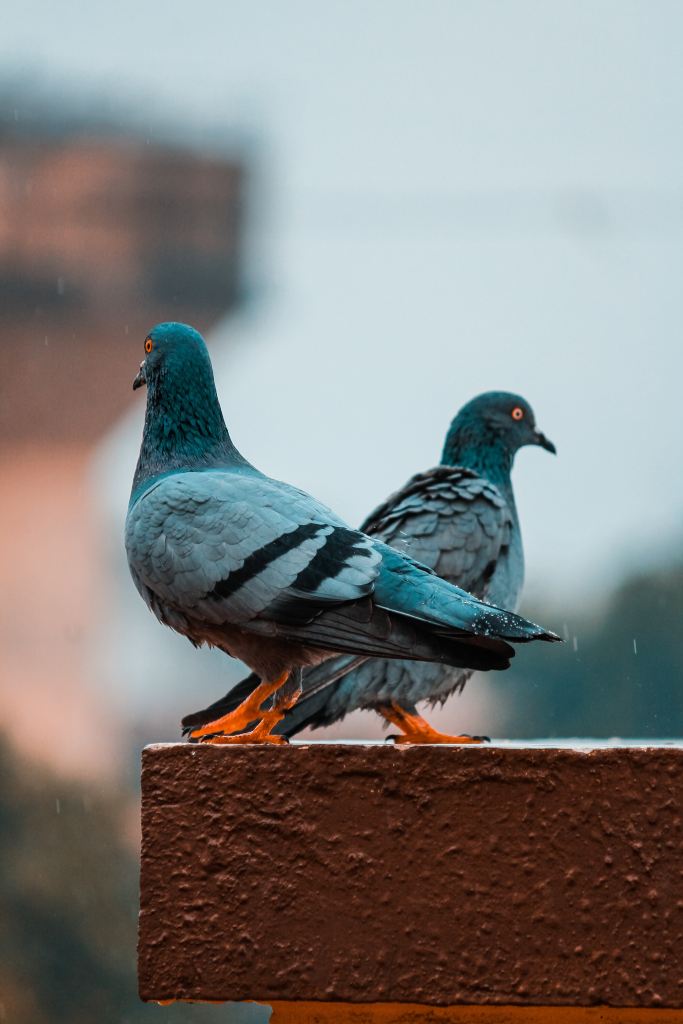
Rain Birds

It was only the occasional flutter
of wings and the soft cooing
that gave them away.

They crowned the clocktower,
looking every bit a part of the architecture,
and I wished I had their job:

fly and coo, find food and flutter in the rain,
exist because they are
with no questions asked.

Surely, if I climbed up to them
they would take flight,
not knowing my intention

is just to sit and rest,
rest in the knowledge that I am
and that fluttering in the rain washes everything clean.

Changing

She weeps
and listens close.
The doctor whispers words
she cannot hear, but understands.
She breathes.

At home,
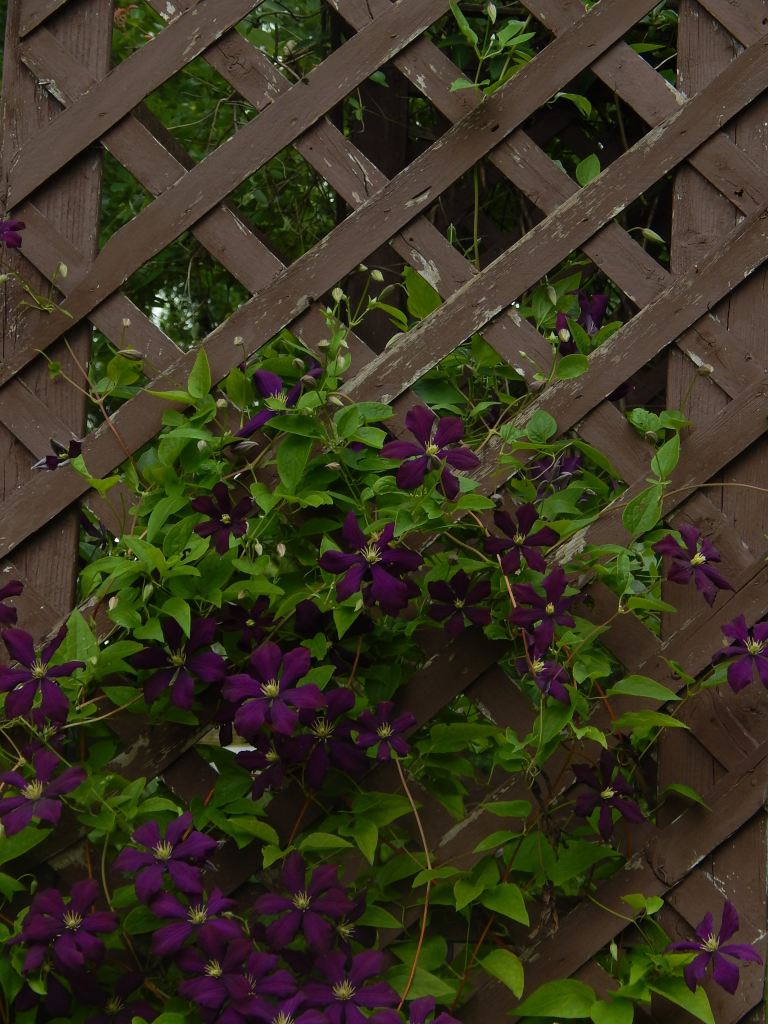
the trailing vines
do more than hide
her childless, shame-filled arms.
They give

desire
to see things grow.
She digs and sings her joy,
and patiently she waits for rain
to change

the shame
and bitter tears
to cheer and sprouting seeds.
Among the blooming, twilit night
she sits

beside
her grief and pain.
She smiles, her gardeners’ thumb
on full display among the blooms.
She kneels

beside
the trailing vines
she digs, she sings her joy
into the blooming, twilit night.
She weeps.

*This poem is a garland cinquain for those that are interested in that kind of thing.